A warm, affirming website for an LGBTQIA+ mental health service

Many LGBTQIA+ and neurodivergent people have felt overlooked or misunderstood in mainstream care. The site had to feel safe from the first screen, explain fees, Medicare and NDIS plainly, and make a free 15-minute consultation easy to book.
Visit the site- An illustrated hero that reflects the community it serves
- Book Now and free consultation buttons above the fold
- Pages for fees and rebates, your first visit and referrals
The Identity Clinic is a community-led mental health service for LGBTQIA+ and neurodivergent people, offering therapy, gender assessments and neuro-affirming autism and ADHD assessments by telehealth across Australia. Many of the people it serves have felt overlooked or misunderstood in mainstream care. We designed a website that feels safe from the first screen and makes a free 15-minute consultation easy to book.
Mental health care built by the people it serves
Storm Hassett founded the clinic in 2023 and is its clinic director. The clinic describes itself as queer-led and community-powered, built by and for LGBTQIA+ and neurodivergent people, and its clinicians share lived experience with the communities they serve. An About page and a Meet the Founder page explain why the clinic exists.
The services cover a lot of ground. There is general therapy for anxiety, depression, trauma, grief and life changes, along with gender and sexuality services, WPATH gender assessments, couples therapy, relationship and sex therapy, and assessments for autism, ADHD and AuDHD. Each one has its own page under Services.
For this audience, the website can be the first test of whether a service can be trusted. It had to feel safe straight away, explain fees, Medicare and the NDIS in plain words, and make the free consultation the easiest next step.
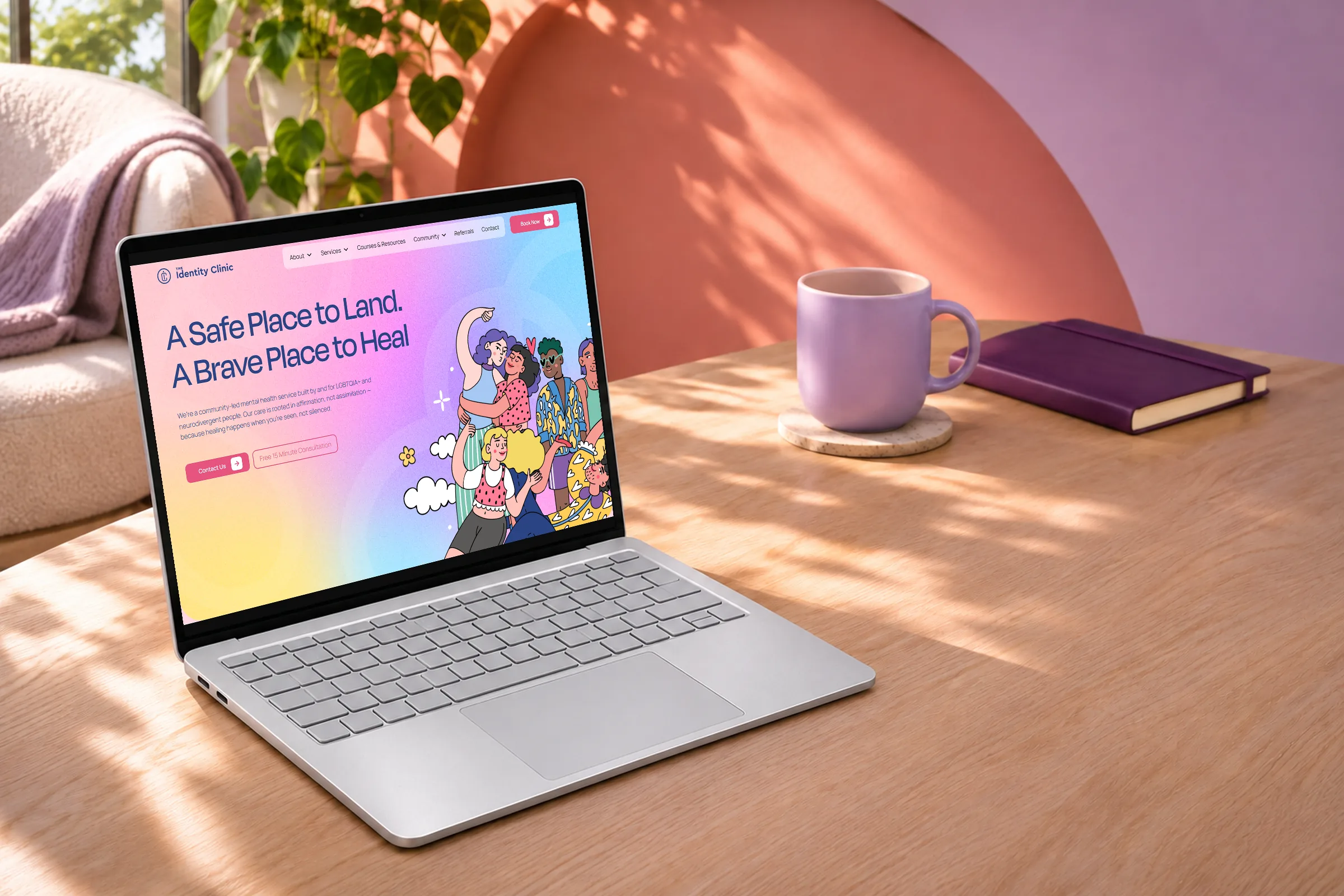
Pastel colours and a hug on the first screen
The home page opens on a soft gradient of pink, lilac, butter yellow and sky blue. On the right, a cartoon-style illustration shows a group of friends wrapped in a hug, with clouds and little flowers drawn around them. We used an illustration so the hero could reflect the community the clinic serves, with warmth and humour, without asking any real person to stand in for everyone.
The headline promises a safe place to land and a brave place to heal. It is set large in Degular, a friendly sans serif, in deep blue, and the body text uses Manrope. Under it sit two buttons, Contact Us and Free 15 Minute Consultation, while Book Now stays in the header, so both ways in are visible before anyone scrolls.
Further down, sections sit on rounded panels in soft pink and pale blue. Outlined tags name the areas of care in a few words each, such as gender affirming care, neuro-affirming assessments, gender affirming vocal training and inclusive and safe, so a visitor can see their own needs listed before they read a paragraph.
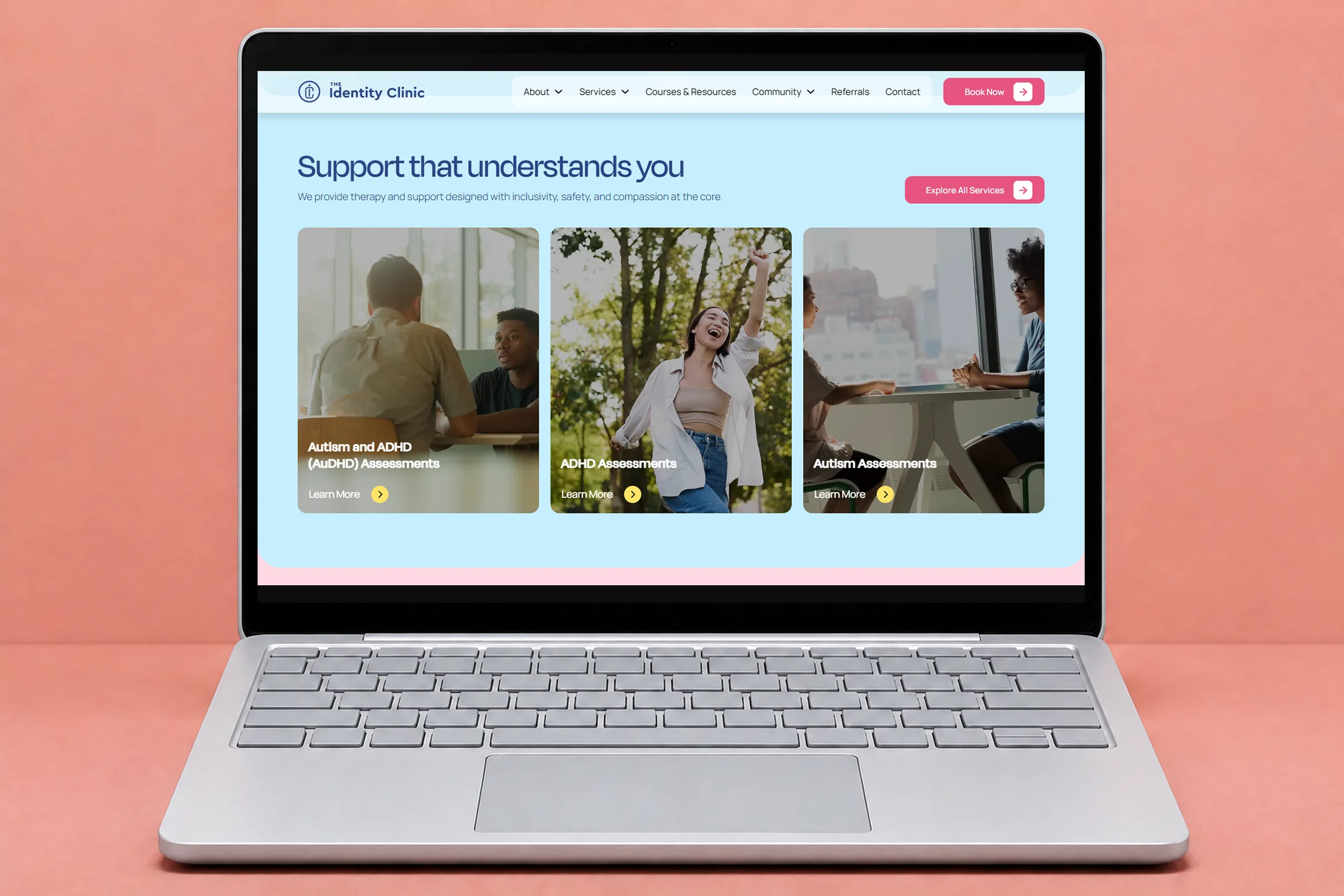
A home page that names what people bring
The home page says early on that identity is rarely the only reason people come in. Then it lists what the therapists help with: anxiety, burnout and chronic stress, minority stress and discrimination, coming out at any age, gender identity and transition planning, autism and ADHD, complex trauma, relationships including non-monogamy, grief and body dysmorphia. Naming these plainly tells someone that they will not have to explain the basics.
A section for trans and gender-diverse people welcomes trans, non-binary, genderqueer and agender people, Sistergirls and Brotherboys, and anyone still questioning. It explains WPATH assessments and the letter a prescriber or surgeon may need, along with support for transition planning, name and pronoun changes and family conversations. Another section speaks to partners, parents and families, and says couples therapy is open to every relationship structure.
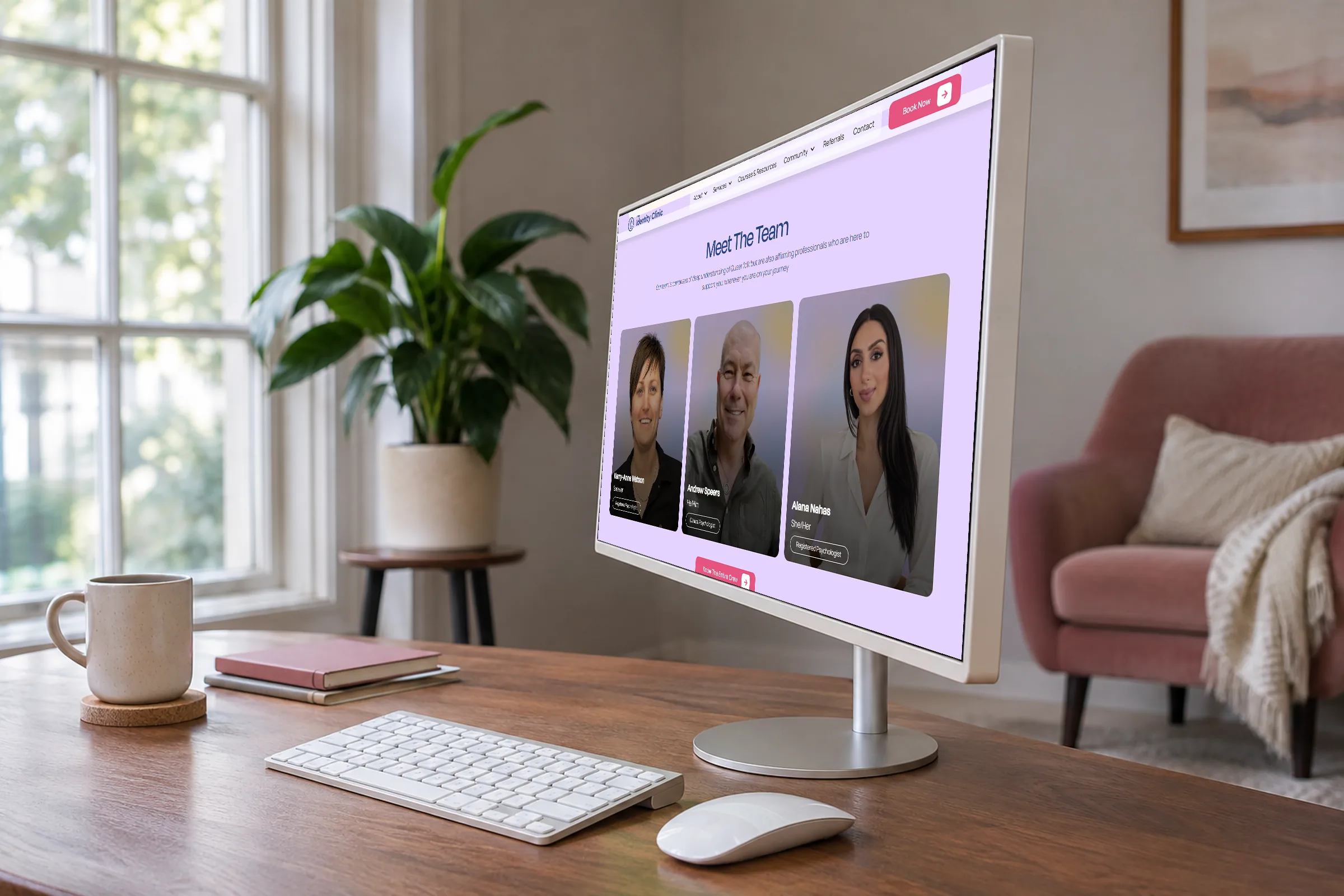
The same care shows in the service pages. The neuro-affirming assessments page talks about masking and self-understanding and sets itself against deficit-based frameworks. The general mental health page tells clients they won't need to explain their pronouns, relationships or community. The team cards show each clinician's pronouns next to their role.
The FAQ is honest about limits too. It says prescribing hormone therapy is outside the team's scope, and that what they do provide is the WPATH assessment and the letter a prescribing doctor may require.
Telehealth across Australia, with clinics in Fitzroy North and Newtown
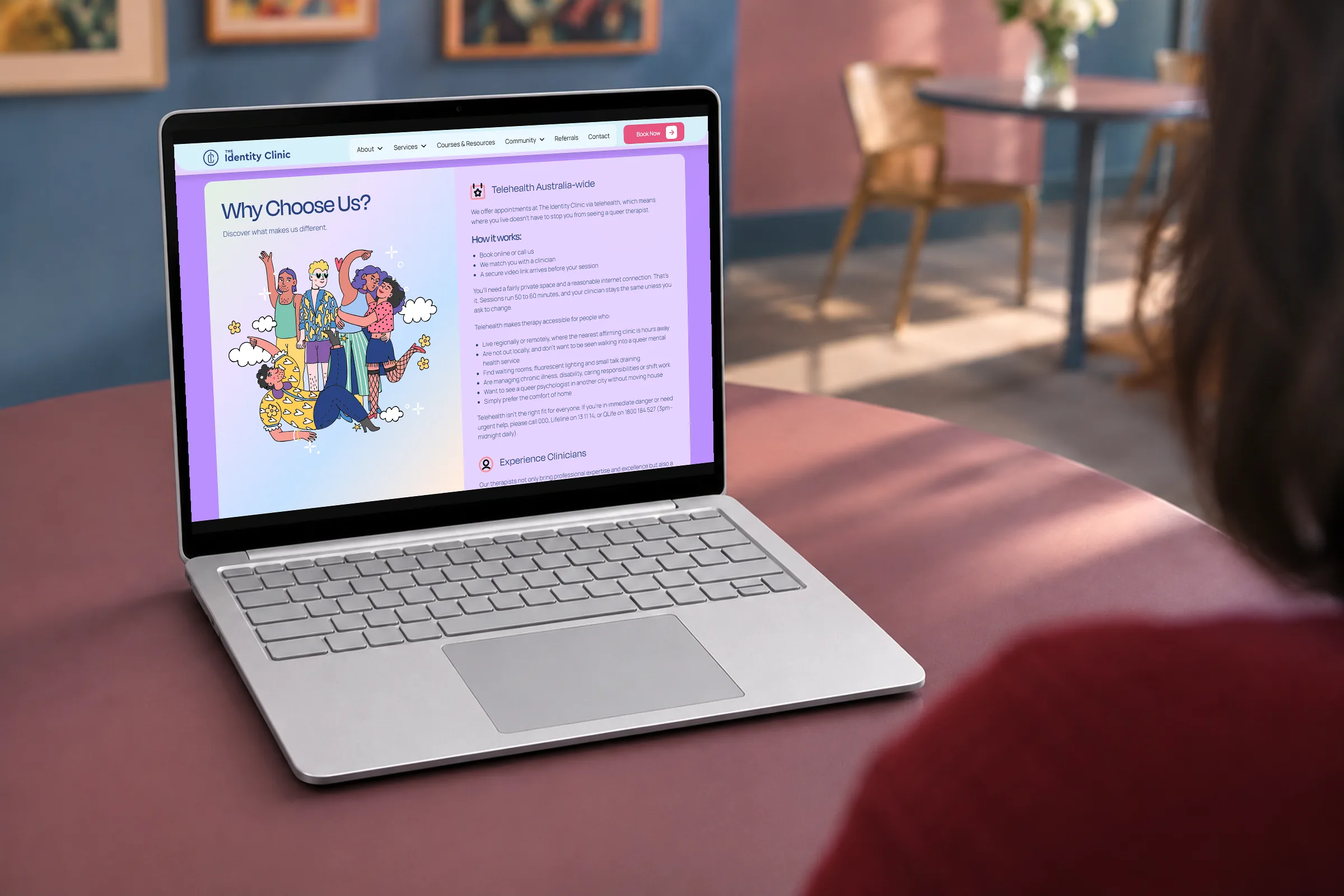
The FAQ explains that telehealth is the main way the clinic works, by secure video from anywhere in Australia. A section on the home page sets out how it works in three steps: book online or call, get matched with a clinician, and receive a secure video link before the session.
The same section lists who telehealth suits: people in regional or remote areas, people who are not out where they live, people who find waiting rooms draining, and people managing chronic illness, disability, caregiving or shift work. For people who prefer to meet in person, the contact page lists clinics in Fitzroy North in Victoria and Newtown in Sydney.
The home page also lists crisis lines, including Lifeline and QLife, so anyone who needs help now is not left waiting for an appointment.
The page titles and FAQ questions use the words people search with, such as LGBTQ counselling, LGBTQ psychologist, WPATH assessment and LGBTQIA+ mental health care. One FAQ asks directly whether you need a GP referral to see an LGBTQ psychologist, which is the kind of question someone types before they book.
Costs laid out before anyone has to ask
The clinic says care should be financially accessible, so the home page has a section on fees, Medicare rebates and the NDIS. Its table has four columns: service, session fee, Medicare rebate and typical gap. Showing the gap answers the question people actually have, which is what they will pay out of pocket. The section also notes that counsellors are not eligible for Medicare rebates, that NDIS participants who self-manage or use a plan manager can use their funding, and that payment plans are available for assessments.
The Fees and Rebates page we built goes further. It has tables for psychology, clinical psychology, mental health social work and couples therapy, most with private, NDIS and Medicare rates side by side, then lists each assessment with what it includes and how rebates apply. The FAQ adds that no GP referral is needed to book, only to claim a Medicare rebate.
Under the Community menu, a Support Pool page explains a community-funded fund that helps cover the cost of care, paid straight to the provider. Its short application form makes pronouns optional, a small detail that matches everything else on the site.
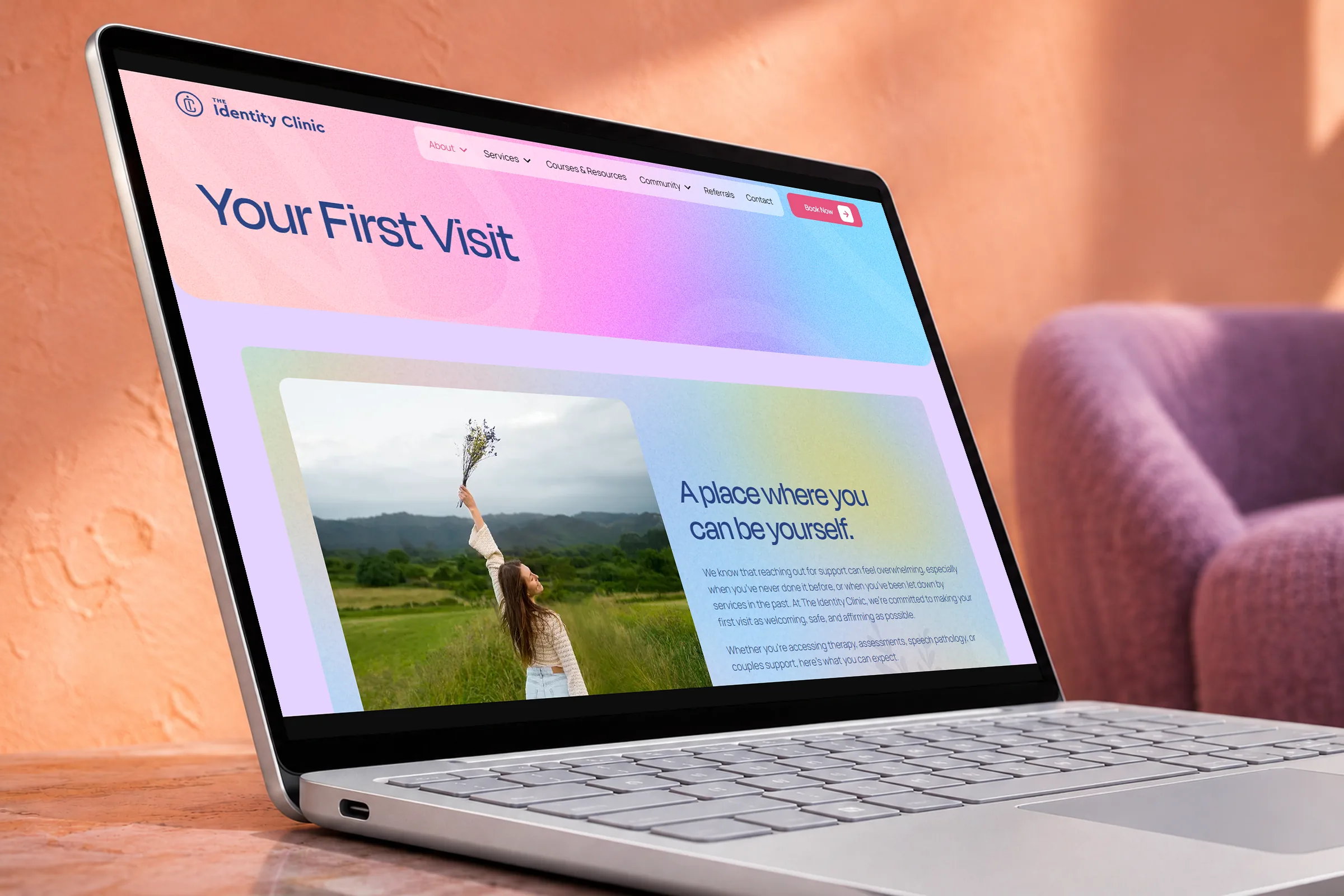
Taking the fear out of the first appointment
For someone who has had a bad experience before, the first visit is the hardest part. The Your First Visit page walks through it in order: booking, intake forms written to include diverse identities, genders and relationship structures, what the space is like, including gender-neutral bathrooms, and how to ask for sensory, mobility or communication needs. It explains what happens in the first session, what to do if a telehealth call drops, and what to bring, ending with yourself, exactly as you are.
The page closes with a promise that clients will never be asked to justify or defend their identity. The home page FAQ adds that cameras can stay off in a first telehealth session and that there is no pressure to share anything before you are ready.
Professionals get a clear path as well. The Referrals page has two options, an NDIS referral and a private referral for GPs, psychiatrists, psychologists, other allied health providers or people referring themselves, each with a Refer Now button that opens an online form. The booking page includes a short video on who the team is and what to expect, and notes that people who prefer writing to calling can get in touch by email.
Safety that shows on the page
When a service's clients have been let down before, calling it safe is not enough. Safety has to show up in details people can check for themselves: pronouns on team profiles, intake forms that fit real lives, the gap you will pay, and a free short consultation before you commit to anything.
That is the main lesson from this mental health website design. Each of those details answers a worry before the visitor has to say it out loud, and that does more to build trust than any headline.
Project summary
Want a site
like this one?
Start with a free 20-minute diagnostic. We look at your current site and tell you what we would change first.
