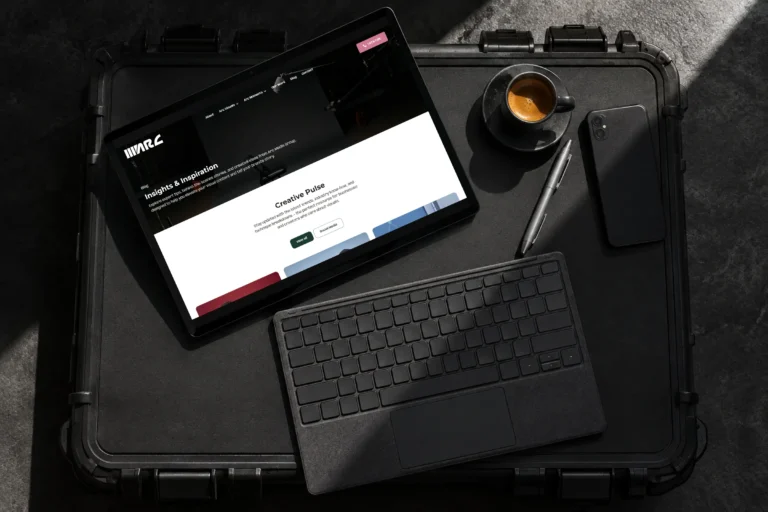
A website for a dietitian and sports nutrition practice in Eltham

Nutrition concerns can feel overwhelming, and no one diet fits everyone. The practice treats everything from diabetes and IBS to sport performance, works with NDIS participants, and clients can claim Medicare rebates with a GP referral, so the site had to make that range easy to scan and booking the obvious next step.
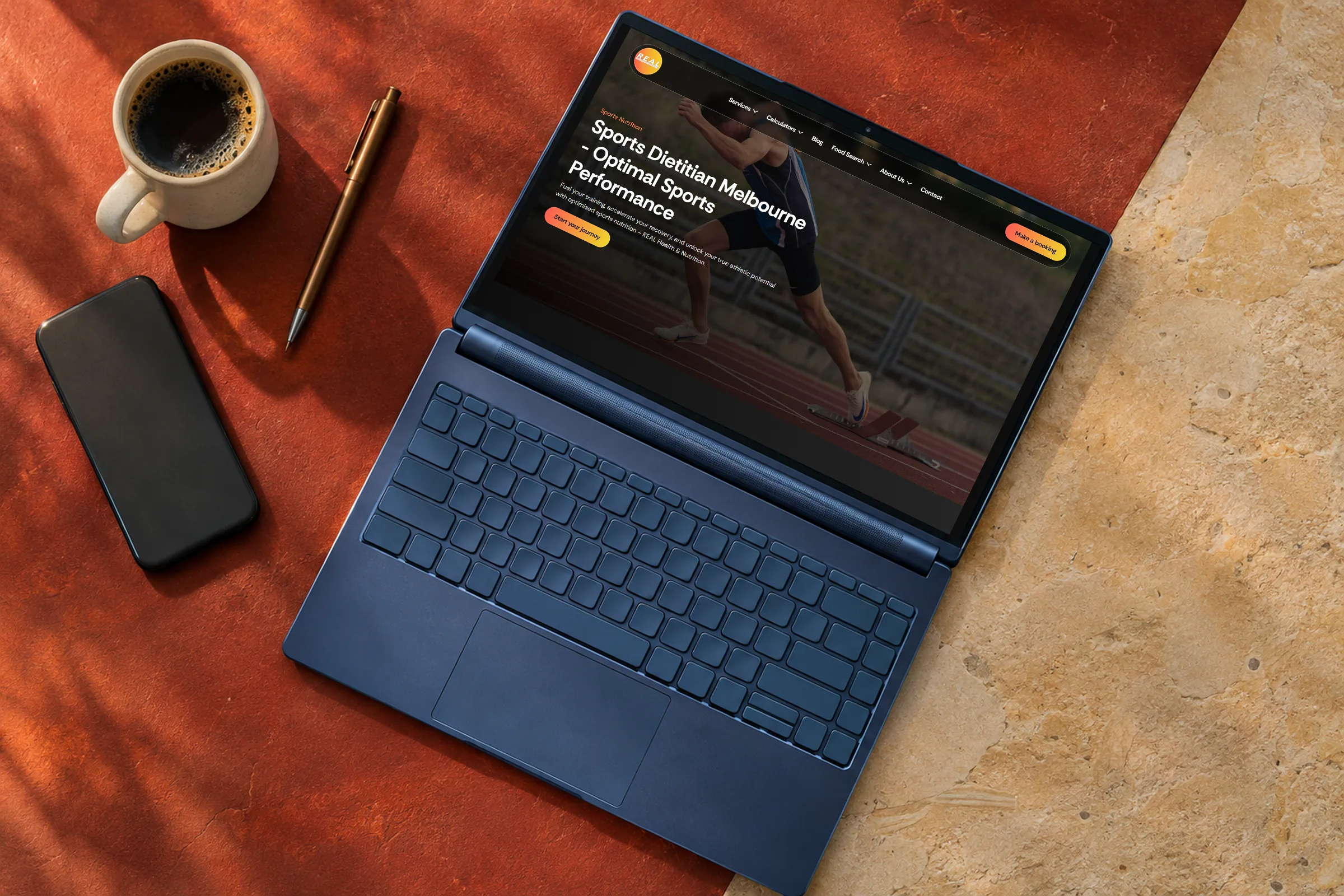
Visit the site- A booking button in the header and the hero
- Service pages for 1-to-1 consultations, NDIS support and corporate wellness
- A strip of the conditions they treat, right under the hero
REAL Health & Nutrition is a dietitian and sports nutrition practice in Eltham, in Melbourne's north-east, with telehealth for clients further away. Its clients range from people managing diabetes or IBS to athletes, NDIS participants and whole workplaces. We designed a website that lets each of them spot their concern on the first screen and book without having to look for how.
One practice with a very wide brief
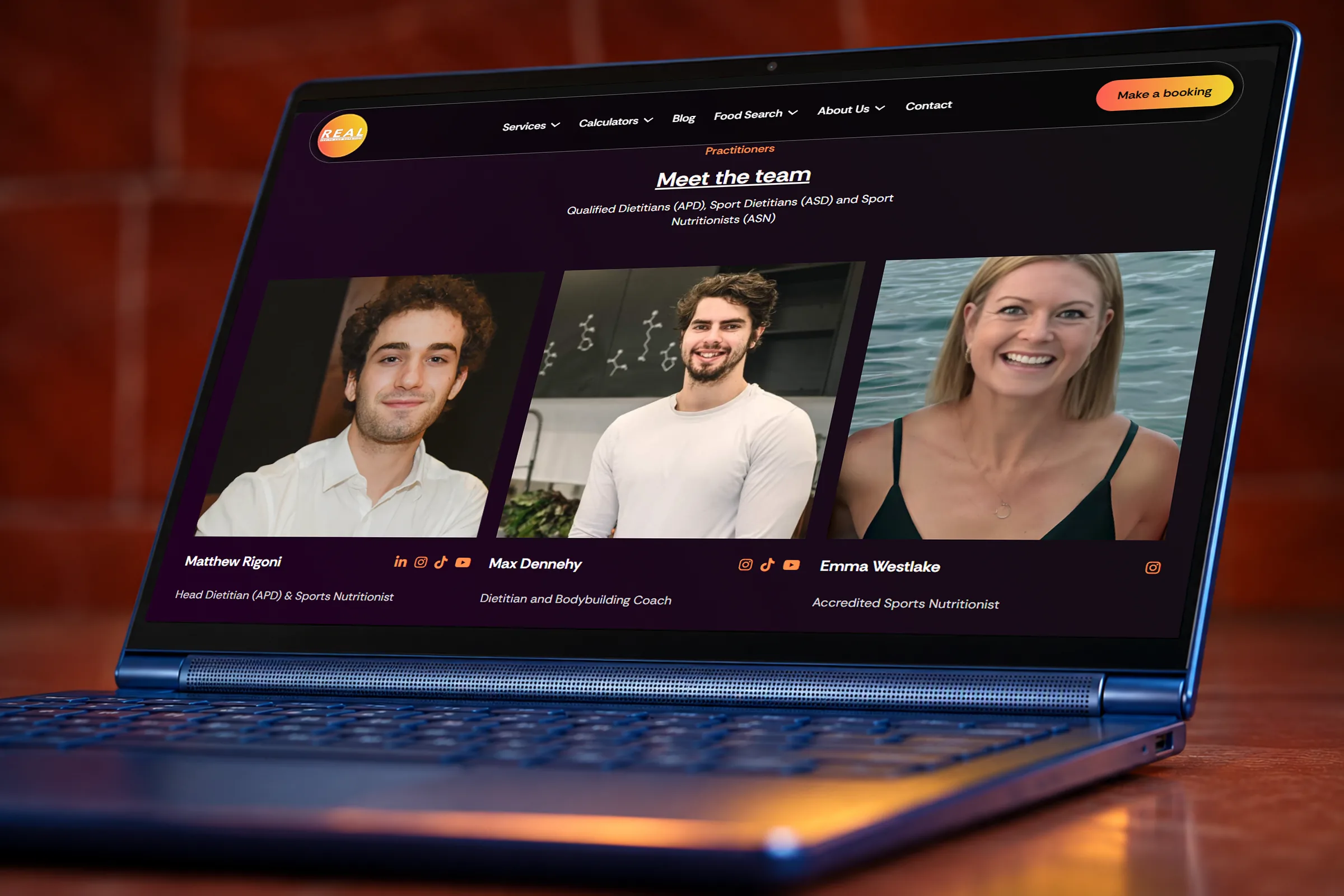
The practice was founded in Melbourne by Matthew Rigoni, an Accredited Practising Dietitian and sports nutritionist who is also its head dietitian. The wider team is made up of Accredited Practising Dietitians, Accredited Sports Dietitians and sports nutritionists, and a Meet Our Team page lists each practitioner's qualifications, focus areas and the funding they work with.
The range of work was the real design problem. A visitor might be someone with high cholesterol, a bodybuilder working out their macros, a carer helping an NDIS participant learn to cook, or an HR manager looking for a workplace workshop. Nutrition concerns can feel overwhelming, and no one diet fits all of these people. The site had to make that range easy to scan and make booking the obvious next step.
Booking first, then the conditions they treat
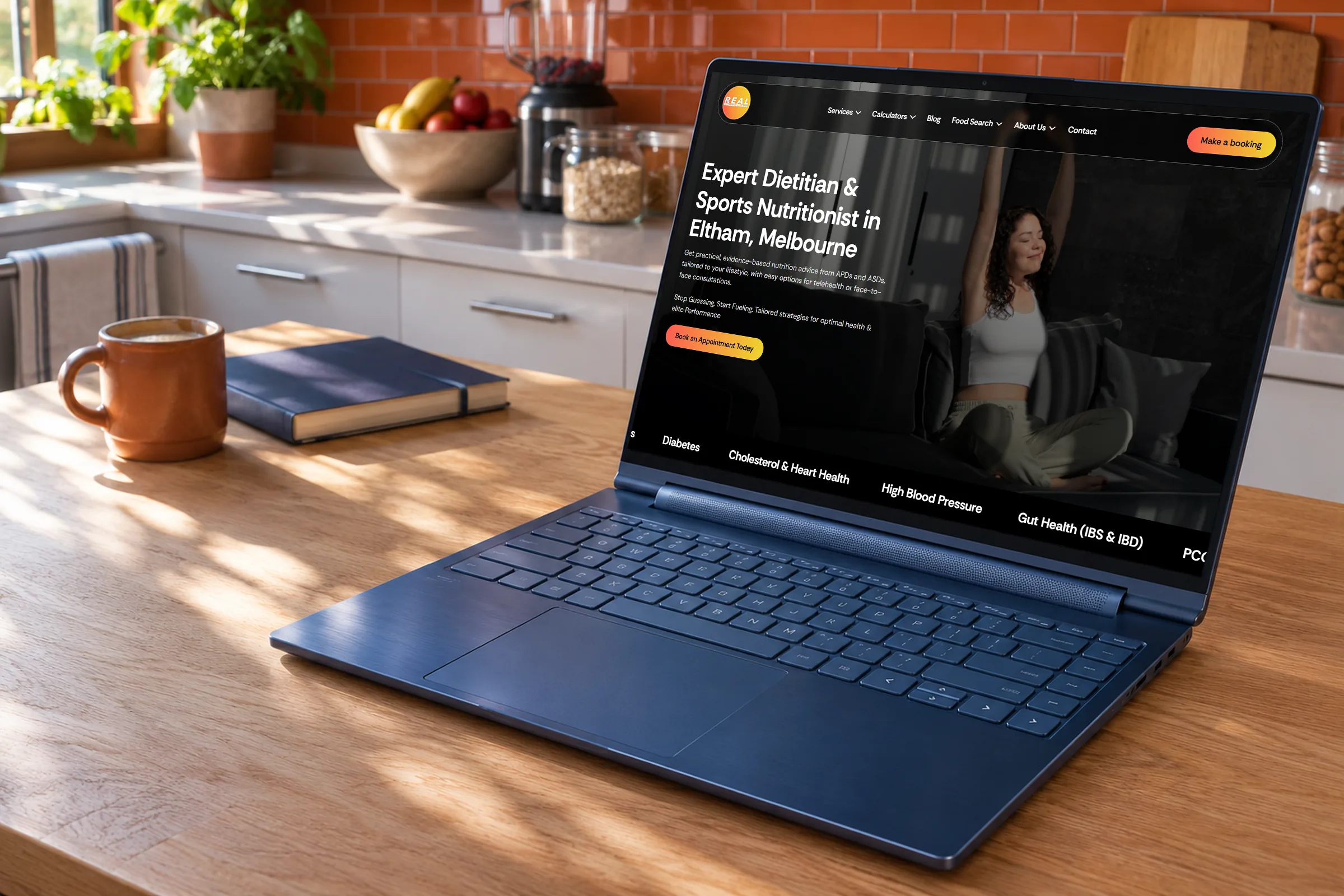
We put a Make a booking button in the header and a second one, Book an Appointment Today, in the hero. The header stays in view as you scroll, and on a phone the booking button sits beside the menu icon instead of hiding inside it, so it is always one tap away.
The hero headline names the service and the place in one line: an expert dietitian and sports nutritionist in Eltham, Melbourne. The short line under it mentions accredited dietitians, evidence-based advice and a choice of telehealth or face-to-face consultations.
Right under the hero, a strip of the conditions they treat scrolls slowly across the screen: weight loss, diabetes, cholesterol and heart health, gut health, PCOS, menopause, osteoporosis, sport nutrition and more. Someone who arrives worried about one thing sees it named within seconds, before they have read a single paragraph.
A page for each way of working
Three cards below the strip lead to the service pages we built: 1-to-1 consultations, NDIS nutrition support and corporate wellness programs.
- 1-to-1 consultations covers medical nutrition therapy for conditions such as diabetes, heart health, gut problems and hormones, plus sport and performance nutrition, with telehealth or in-person sessions in Eltham.
- NDIS nutrition support speaks to participants, families, carers and support coordinators, and focuses on practical skills such as meal planning, grocery shopping and cooking.
- Corporate wellness programs offers lunch-and-learn workshops, live webinars or pre-recorded sessions for office, hybrid and remote teams.
Each page has its own frequently asked questions, so an employer and a parent each get answers to the questions they are actually asking.
A dark site with a warm gradient
The look is bolder than most health practices. Pages sit on a near-black background, and a coral-to-yellow gradient runs through the round logo, the main buttons and an angled panel that invites visitors to take the first step. Headings and body text share one clean sans serif, Rethink Sans, and the header floats over the page as a rounded bar.
The hero photo softens the dark palette: a woman stretching on a couch in a softly lit room, eyes closed and smiling. The dark look suits the sport and performance side of the practice, and that photo keeps the first impression about everyday wellbeing.
Free tools that answer real questions
Two menu items set this site apart from most dietitian websites: Calculators and Food Search. Under them sit five free tools that run in the browser.
- Calorie Calculator estimates daily energy and macronutrient targets, with a quick general mode and a performance mode that plans around the week's training.
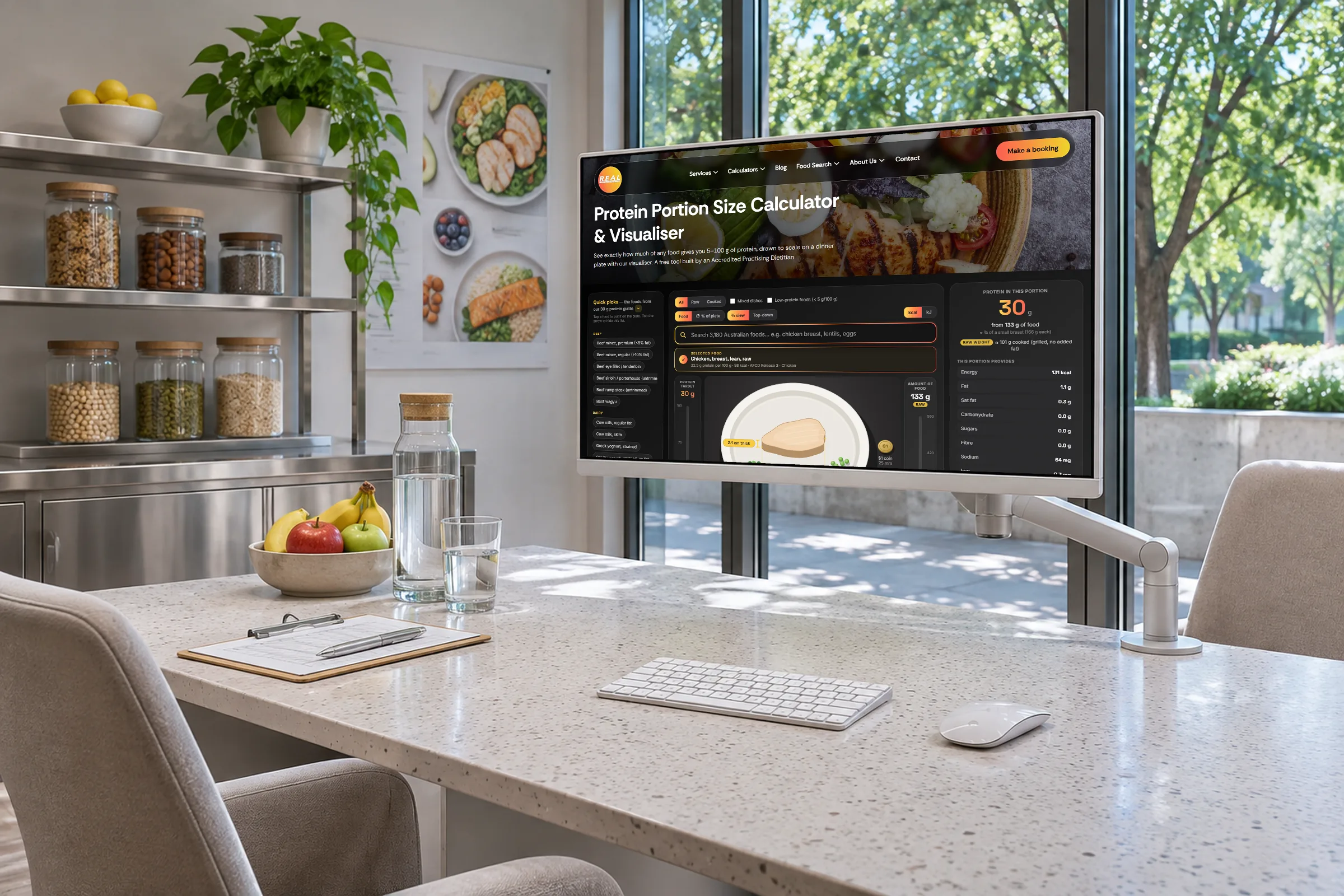
- Protein Visualiser shows how much of a food gives you a chosen amount of protein and draws that portion to scale on a dinner plate, next to familiar size references.
- Athlete's Plate builds a plate for the day's training load, from rest days up to carb loading before an ultra.
- GI Search is a searchable glycaemic index database with a meal builder, and a blood glucose simulator that opens only after you accept that it is for education.
- Food Chemical & FODMAP Search looks up salicylates, amines and FODMAPs food by food, with traffic-light panels for serve sizes.
Each tool page explains its method, lists its references, includes a note that it does not replace personal advice and points to a booking button. The GI and FODMAP tools also have a colourblind mode. Someone checking the protein in their lunch learns something useful, and if they want help putting it into practice, the next step is right there.
Rebates, referrals and the NDIS in plain words
For a health practice, cost and referrals are often the first questions, so the site answers them early. The home page FAQ explains that you don't need a doctor's referral to book, and that a GP referral can make you eligible for a Medicare rebate. It also covers private health insurance, weight loss medication, and whether you get a meal plan. Usually you don't: the 1-to-1 page explains that the aim is to teach you to build balanced meals yourself.
A Pricing page sets out each service alongside its Medicare, private health, NDIS and DVA notes. Across the site, a row of badges shows the funding the practice works with, Medicare, NDIS, DVA and WorkSafe, next to the Accredited Practising Dietitian mark.
The NDIS page is just as direct. It says the practice is not a registered NDIS provider, works with plan-managed and self-managed participants, and can recommend registered dietitians for people whose plans are managed by the NDIA. It also says the dietitian can help with fussy eating and texture-modified diets, but leaves changes to textures, fluids and swallowing to speech pathologists and works alongside them. Being open about limits saves families and coordinators an enquiry that goes nowhere.
The rest of the copy has the same plain tone. It talks about realistic, goal-oriented plans and long-term results, says it doesn't promise miracles and keeps jargon out of the way. The footer sums it up with a short line about simple nutrition and lasting health, above a note that the information on the site is educational.

Eltham as the base, telehealth for everyone else
The clinic is on Bolton Street in Eltham, next to Eltham Ridge Medical Centre, and the Locations page lists a second Eltham location as well. It then names the suburbs the practice serves, with their own pages for Eltham, Greensborough, Diamond Creek, Watsonia and Templestowe. The booking page also gives a phone number for questions and in-home appointments.
The Greensborough page, for example, is written for the people who live there. It mentions the Plenty River Trail and local sports venues, explains how to get to the Eltham clinic, and offers telehealth to anyone who would rather not travel. Telehealth reaches clients across Melbourne and the rest of Australia, and the NDIS page adds in-home sessions for participants around Eltham.
The page titles do the same work for search, with phrases such as dietitians and nutritionists in Eltham, book a dietitian consultation in Eltham or by telehealth, and dietitian Greensborough. For a dietitian in Eltham, those are the words local people type.
Lead with the conditions, then give something useful away
When a practice treats a long list of conditions, show the list early and let people find themselves in it. A strip of plain condition names under the hero reassures a first-time visitor faster than a paragraph about expertise.
The second lesson is that genuinely useful free tools are worth building. A protein visualiser or a FODMAP search brings in people with a real question, answers it, and leaves a booking button at the end. In dietitian website design, that is one of the most honest ways to earn trust before the first appointment.
Project summary
Want a site
like this one?
Start with a free 20-minute diagnostic. We look at your current site and tell you what we would change first.